
Buying Guide
Home Sauna Buying Guide: Infrared vs. Traditional Saunas
Buying a home sauna starts with a more useful question than simply asking which sauna is “best.”
- Where will it go?
- How much heat do you prefer?
- How many people will use it?
- What electrical service is available?
And do you want infrared heat or the higher-temperature experience of a traditional sauna?
Those decisions can narrow the field quickly.
This guide walks through the practical differences between infrared and traditional saunas, indoor and outdoor installations, capacity, electrical requirements, construction, features, and other considerations before you buy.
Affiliate Disclosure: TheMasterCleanse.org may earn a commission from purchases made through links on this page, at no additional cost to you.
30-Second Sauna Decision Guide
Indoor + full-spectrum infrared
Consider Equinox 2
A compact two-person indoor option with full-spectrum infrared.
Indoor + more room
Consider Solstice 3
A three-person indoor option using far-infrared heat.
Outdoor installation
Consider Luminar 2
A two-person outdoor option with full-spectrum infrared.
Prefer classic high-temperature air
Compare Traditional Saunas
Traditional systems may fit buyers who prefer hotter surrounding air and sauna stones.
Infrared vs. Traditional Sauna
Both infrared and traditional saunas expose the body to heat, but they create that environment differently.
Infrared Sauna
Infrared saunas use infrared-emitting heaters rather than relying primarily on very hot surrounding air.
They typically operate at lower ambient air temperatures than traditional saunas while still producing substantial heat exposure and sweating.
Infrared models are available in far-infrared and full-spectrum configurations. Full-spectrum systems may combine near, mid, and far infrared.
Consider infrared if you prefer:
- lower surrounding air temperatures
- electric cabin-style installation
- indoor models with relatively compact footprints
- full-spectrum or far-infrared options
- straightforward home operation
Traditional Sauna
Traditional electric saunas primarily heat the surrounding air and sauna stones.
They generally operate at higher air temperatures and provide the classic sauna environment many people associate with Nordic sauna bathing.
Depending on the system, water may be applied to heated stones to temporarily increase humidity.
Consider a traditional sauna if you prefer:
- substantially hotter surrounding air
- the classic sauna experience
- sauna stones
- the option for bursts of higher humidity
- a more traditional heat environment
Neither Technology Needs a “Detox” Claim
Current evidence does not establish that either infrared or traditional sauna is superior because it removes more toxins. The practical differences above are a more useful basis for choosing.
Read our evidence review: Saunas, Sweating and “Detox”: What the Evidence Actually Says
Six Decisions to Make Before Buying a Home Sauna
1. Indoor or Outdoor?
Indoor saunas need an appropriate dry interior location, adequate clearances, electrical access, and enough room for assembly and use.
Outdoor models add weather exposure, foundation or surface requirements, exterior durability, and environmental considerations.
Do not assume an indoor model can simply be placed outdoors.
2. How Many People Will Actually Use It?
Manufacturer capacity numbers are useful, but comfort matters too.
A two-person sauna can be an efficient choice for one or two users.
Larger cabins provide more elbow room and may make more sense if multiple people will regularly use the sauna together.
Compare exterior dimensions as well as advertised capacity.
3. Electrical Requirements
This is one of the most important details to confirm before ordering.
Some home infrared models operate on dedicated 120V circuits, while larger infrared and traditional systems can require different electrical service.
Verify:
- voltage
- amperage
- outlet type
- dedicated-circuit requirement
- GFCI or other local-code requirements
If a new circuit or other electrical work is required, consult a qualified electrician.
4. Heat Preference
Someone who enjoys intense high-temperature air may prefer a traditional sauna.
Someone who prefers a lower ambient temperature may prefer infrared.
Neither is presented here as medically superior. This is a question of preference.
5. Construction and Location
Compare:
- wood species
- exterior materials
- indoor/outdoor rating
- dimensions
- required clearances
- floor requirements
- door clearance
- ventilation requirements
- assembly method
6. Warranty, Service and Long-Term Ownership
A sauna is a substantial home purchase.
Compare:
- warranty duration
- what components are covered
- labor/service provisions
- replacement parts
- maintenance requirements
- manufacturer support
The headline warranty duration should not be the only consideration.
Three Sun Home Models to Compare
Sun Home is one manufacturer offering several different infrared configurations. The three models below illustrate three useful buying paths: indoor full-spectrum, indoor far-infrared, and outdoor full-spectrum.
TheMasterCleanse.org has an affiliate relationship with Sun Home, but the distinctions below are based on current manufacturer specifications rather than personal product testing.
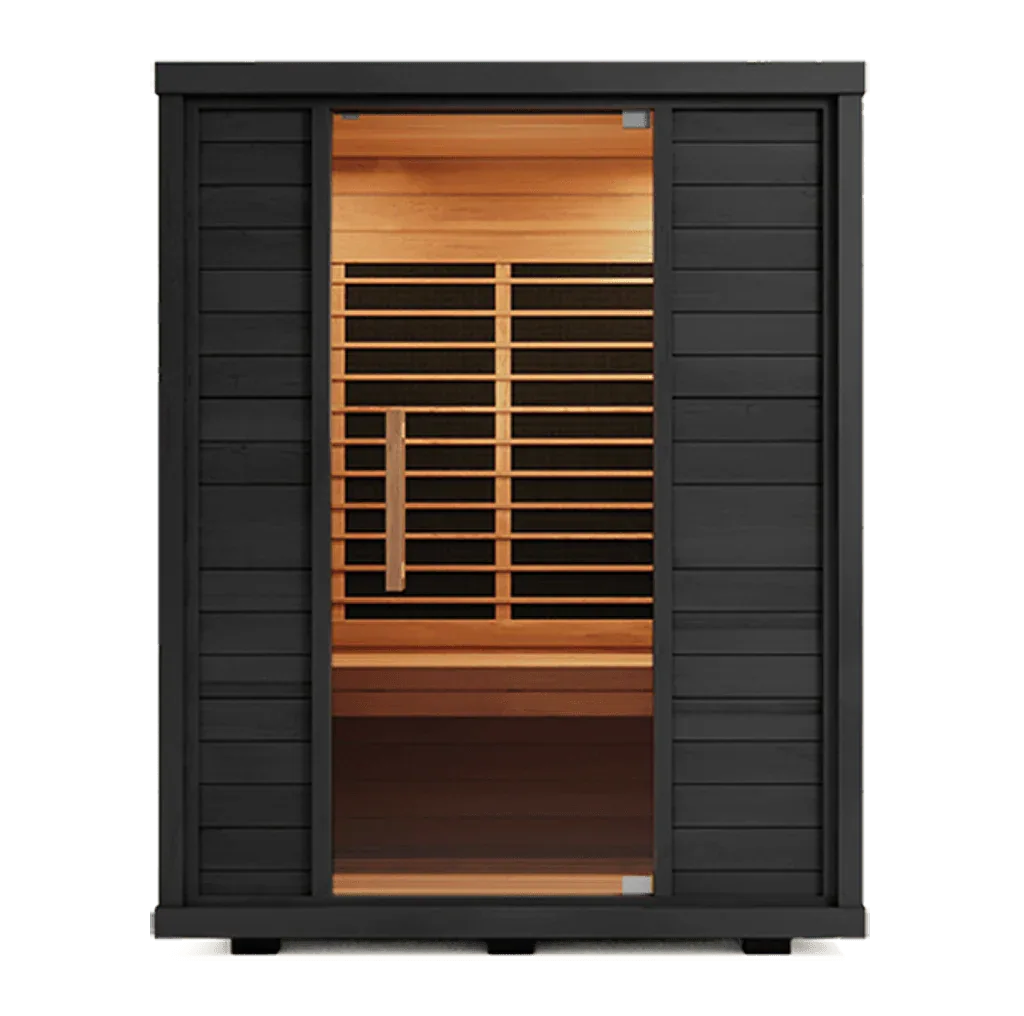
Sun Home Equinox 2
Indoor full-spectrum option for two people
- Indoor
- 2-person
- Full-spectrum infrared
- Up to 165°F
- Dedicated 120V / 20A
- 7-year warranty
Full published specifications
According to Sun Home's published specifications
- Indoor
- 2-person capacity
- Full-spectrum infrared
- 4 far-infrared heaters
- 2 full-spectrum heaters
- Published maximum temperature: 165°F
- Published ultra-low EMF: under 0.5 mG
- Eucalyptus construction
- Dedicated 120V / 20A circuit
- NEMA 5-20 outlet
- 7-year warranty
The Equinox 2 may fit buyers who want a compact indoor cabin with full-spectrum infrared rather than far-infrared alone.
Its two-person footprint keeps it smaller than larger family-size cabins, while the dedicated 120V / 20A electrical requirement may be workable in many homes with the appropriate circuit. A dedicated circuit is required.
Pricing and promotions may change. Confirm current specifications and purchase terms with Sun Home.
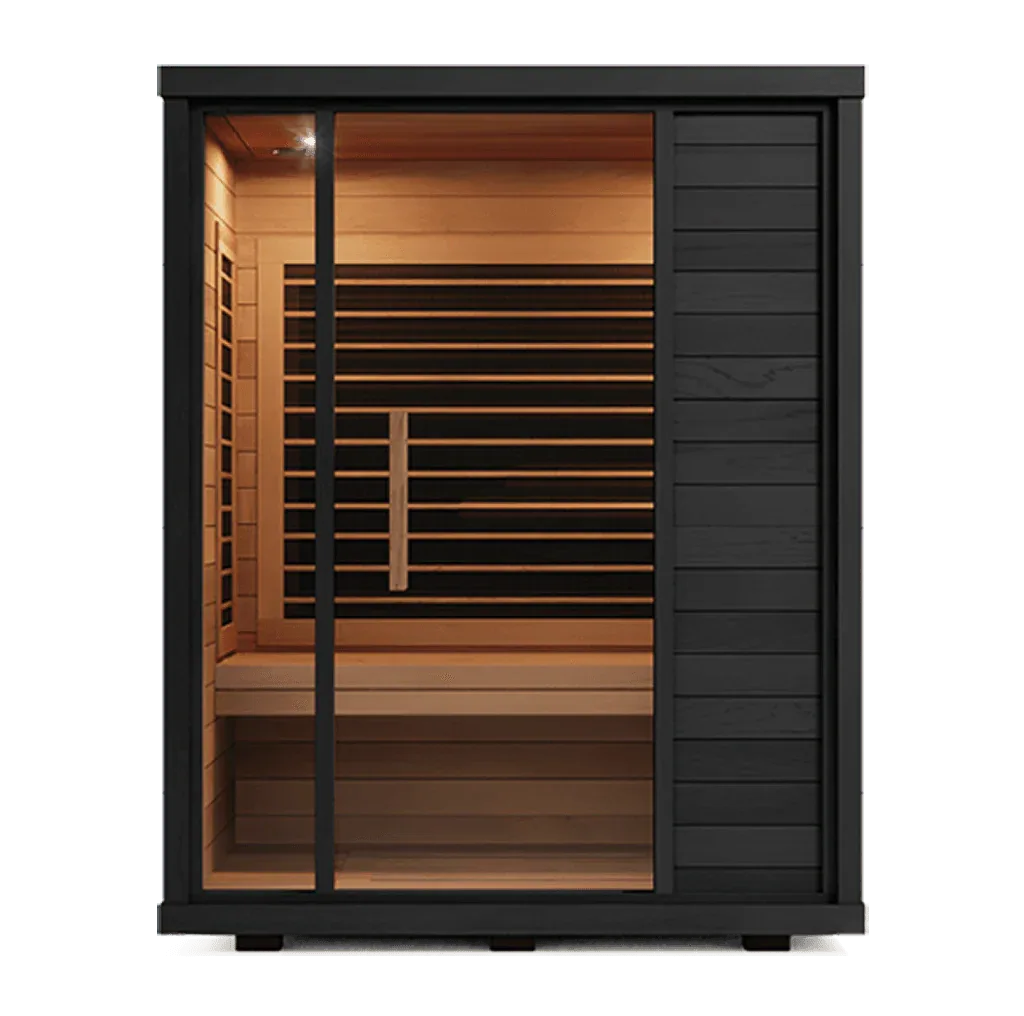
Sun Home Solstice 3
Indoor far-infrared option with more seating space
- Indoor
- 3-person
- Far-infrared
- Up to 140°F
- Dedicated 120V / 20A
- 7-year warranty
Full published specifications
According to Sun Home's published specifications
- Indoor
- 3-person capacity
- Far-infrared
- 10 far-infrared heaters
- Published maximum temperature: 140°F
- Published ultra-low EMF: under 0.5 mG
- Eucalyptus construction
- Dedicated 120V / 20A circuit
- NEMA 5-20 outlet
- 7-year warranty
The Solstice 3 may make sense for buyers who prefer far-infrared heat and want more interior capacity than a compact two-person cabin.
It provides a useful contrast with the Equinox: more seating capacity and a far-infrared-only system rather than a full-spectrum configuration.
Pricing and promotions may change. Confirm current specifications and purchase terms with Sun Home.
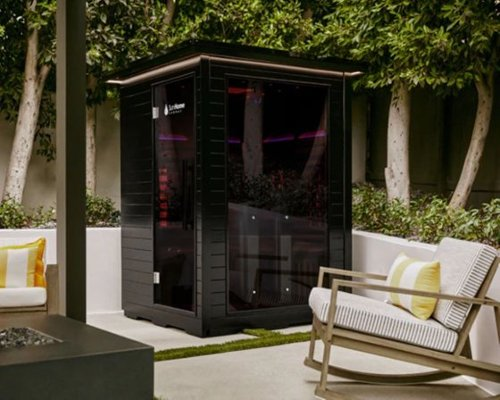
Sun Home Luminar 2
Outdoor full-spectrum infrared option
- Outdoor
- 2-person
- Full-spectrum infrared
- Up to 170°F
- Dedicated 20A circuit
- Limited lifetime warranty
Full published specifications
According to Sun Home's published specifications
- Outdoor
- 2-person capacity
- Full-spectrum infrared
- 3 far-infrared heaters
- 6 full-spectrum heaters
- Published maximum temperature: up to 170°F
- Published ultra-low EMF: under 0.5 mG
- Canadian red cedar
- Aerospace-grade aluminum exterior
- Dedicated 20A circuit
- NEMA L6-20 outlet
- Limited lifetime warranty
The Luminar 2 serves a different use case from the indoor Equinox and Solstice.
It may fit someone specifically planning an outdoor installation who still wants a full-spectrum infrared system.
Its outdoor construction, electrical requirements, site preparation, and substantially larger investment make placement planning especially important before ordering.
Pricing and promotions may change. Confirm current specifications and purchase terms with Sun Home.
Equinox vs. Solstice vs. Luminar
Based on manufacturer specifications. Confirm current details with Sun Home before purchase.
| Specification | Equinox 2 | Solstice 3 | Luminar 2 |
|---|---|---|---|
| Setting | Indoor | Indoor | Outdoor |
| Capacity | 2 person | 3 person | 2 person |
| Infrared type | Full-spectrum | Far-infrared | Full-spectrum |
| Primary heater configuration | 4 far-infrared + 2 full-spectrum | 10 far-infrared | 3 far-infrared + 6 full-spectrum |
| Published max temperature | 165°F | 140°F | Up to 170°F |
| Wood/materials | Eucalyptus | Eucalyptus | Canadian red cedar + aerospace-grade aluminum exterior |
| Electrical requirement | Dedicated 120V / 20A | Dedicated 120V / 20A | Dedicated 20A circuit |
| Outlet | NEMA 5-20 | NEMA 5-20 | NEMA L6-20 |
| Warranty | 7-year | 7-year | Limited lifetime |
| May fit | Indoor buyer wanting 2-person full-spectrum infrared | Indoor buyer wanting more capacity and far-infrared heat | Buyer specifically planning an outdoor full-spectrum installation |
Before You Order
- Measure the installation area
- Verify exterior dimensions
- Verify required side and overhead clearances
- Confirm indoor or outdoor rating
- Identify the required circuit and outlet
- Consult an electrician if electrical work is needed
- Confirm delivery path and door clearances
- Review assembly requirements
- Review warranty exclusions
- Confirm current shipping terms
- Confirm current price and promotions
- Check local electrical and building requirements where applicable
Keep the Buying Decision Separate From “Detox” Claims
A sauna can be evaluated on practical factors such as heat style, installation, construction, comfort, capacity, features, and warranty without relying on sweeping detox claims.
Sweating is a normal response to heat, but evidence that substances can be detected in sweat does not establish sauna bathing as a clinically meaningful whole-body detoxification treatment.
Explore Current Sauna Options
Once you know the type of heat, location, capacity, and electrical requirements that fit your home, compare the manufacturer's current specifications, availability, and pricing before making a purchase.